虚拟语气是一种动词形式,用于表达与现实相反的假设、愿望、建议或不太可能发生的情况。它通常出现在条件句、宾语从句、主语从句等结构中
虚拟语气主要可分为以下两类:
- 做 不可能 假设
- 表示愿望,请求,建议,命令等
做不可能假设
- 1. 从句一律 往 “过去” 退一格
- 2. 主句一律用 would /could/might + 动词
1. 与现在事实相反的虚拟语气
用于表示与当前现实相反的假设
结构:
条件从句:If + 主语 + 动词的过去式
主句:主语 + would/should/could/might + 动词原形
例句:
If I were you, I would study harder.
(如果我是你,我会更加努力学习。)
She would be happier if she lived in the countryside.
(如果她住在乡下,她会更快乐。)
2. 与过去事实相反的虚拟语气
用于表示与过去事实相反的假设
结构:
条件从句:If + 主语 + had + 过去分词
主句:主语 + would/should/could/might + have + 过去分词
例句:
If I had studied harder, I would have passed the exam.
(如果我之前更努力学习,我就会通过考试了。)
She would have been happier if she had lived in the countryside.
(如果她之前住在乡下,她会更快乐。)
3. 与将来事实相反的虚拟语气
用于表示不太可能发生的未来情况
结构:
条件从句:If + 主语 + 动词的过去式 / should + 动词原形(should是shall的过去式 ,一般将来时用will或shall,这里就是用了shall的过去式,should只有作为情态动词时才有应该的含义)
相似的助动词的过去式变位(WCMS我们老师告诉我们简记为厕所美食)
- shall – should
- will – would
- can – could
- may – might
用哪种取决于具体语境
结果会怎样(最标准) → would
If I were you, I would take it.(我会做…)
强调能力/做得到 → could
If I had more time, I could help you.(我能帮得上)
强调可能性小/不确定 → might
If it were warmer, we might go out.(也许会出去)
表示建议/义务 → should(不是典型“结果”)
常见的是 if 从句用 should(万一…),主句通常仍是 would/can 等。
If you were sick, you should see a doctor.(建议)
主句:主语 + would/should/could/might + 动词原形
例句:
If it rained tomorrow, we would stay at home.
(如果明天下雨,我们就会待在家里。)
If he should fail the exam, he would lose his scholarship.
(如果他考试不及格,他就会失去奖学金。)
if I should meet thee after long years, how should I greet thee
万一我们将来重逢了,我又该如何面对你呢
正常真实时态 → 虚拟要倒退成:
- 现在(do /is)→ 过去(did /were)
- 将来(will do)→ 过去式 / should do
- 过去(did)→ 过去完成(had done)
对应主句永远是:
- 假设 现在 / 将来→ would + 动词原形
- 假设 过去→ would have + 过去分词
虚拟语气的特殊情况
1. 省略 if 的倒装结构
在与现在或过去事实相反的虚拟条件句中,如果条件从句中有 were/had/should,可以将 if 省略,同时将 were/had/should 移到句首。
例句:
If I were you, I would take the job.
→ Were I you, I would take the job.
(如果我是你,我会接受这份工作。)
If he had known the truth, he wouldn’t have told her.
→ Had he known the truth, he wouldn’t have told her.
(如果他知道真相,他就不会告诉她了。
2. 混合虚拟语气
当条件从句和主句的时间不一致时,需要根据实际情况分别使用不同的虚拟语气形式。
例句:
If I had studied harder last year, I would be in a better position now.
(如果我去年更努力学习,我现在就会处于更好的位置。)
If he were here now, he would have helped us yesterday.
(如果他现在在这里,他昨天就会帮助我们了。)
If I could turn back time, I would have held you in my arms.(更浪漫)
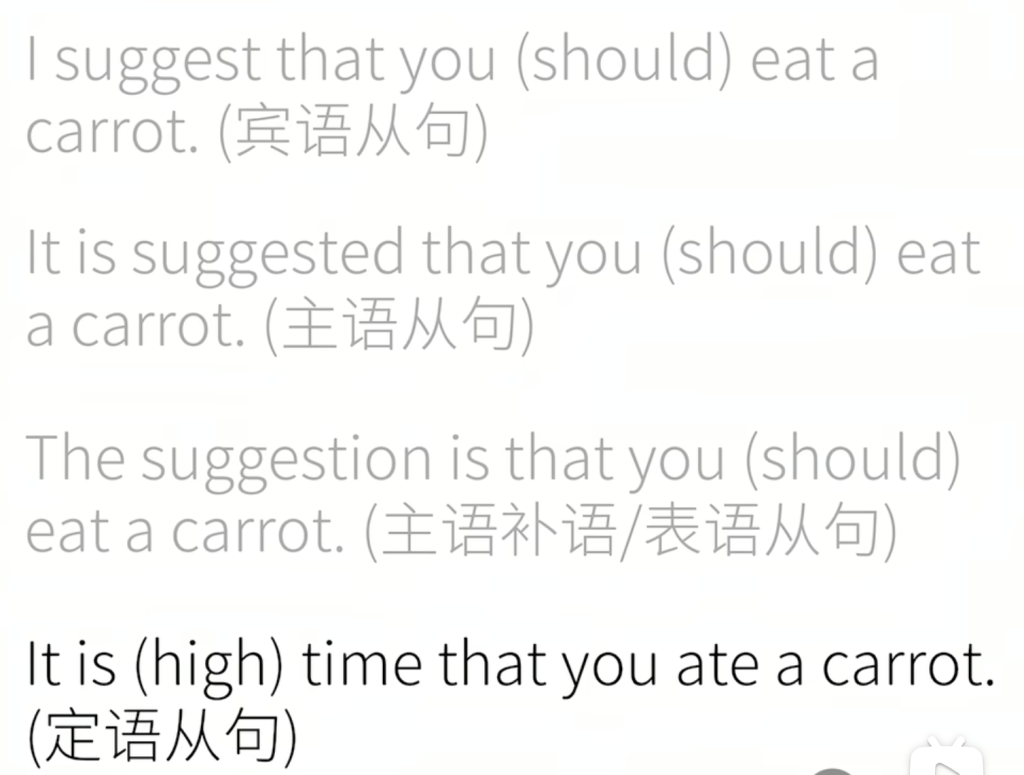
3. 虚拟语气在名词性从句中的用法
在表示建议、要求、命令等含义的名词性从句中,谓语动词通常使用“should + 动词原形”,其中 should 可以省略。
例句:
I suggest that he (should) study harder.
(我建议他更努力学习。)
It is important that we (should) take action immediately.
(我们立即采取行动是很重要的。)
表达愿望,请求,建议,命令
都是发生在脑海中的事情,现实中并没有发生
wish 和 would rather
- 对现在的愿望:wish + 动词过去式
- I wish that I were a rabbit 我希望我是只兔子
- 如果用am表示我现在已经是一个兔子,那就在假设句中出现相矛盾, 无论人称是什么,都应该用were
- I wish you were here 我希望你曾来过这❌我希望你现在就在这里✅
- 使用场景:你现在不在我身边,我希望“此刻你在”。
- 对过去的愿望:wish + had/would have + 动词过去分词
- I wish you had been here (yesterday/then).
- 使用场景:你当时没来/没在场,我希望“那时候你在”。
- 对将来的愿望:wish + should/ WCM + 动词原形(情态动词后必须接原形)
- I wish you would come next time.
- 使用场景:你经常不来/让人失望,我希望你下次能来(带点抱怨或请求对方改变)
对demand请求 suggest建议 insist order命令接的虚拟语气一律是should + 动词原形(+ed也是接动词原形)
拿order举例子的话:
- The teacher orders that everyone (should) stay silent now.(老师命令大家现在保持安静。)
- that 从句:(should) + stay(原形)
- The teacher ordered that everyone (should) stay silent during the exam yesterday.(老师昨天考试时命令大家保持安静。)
- 主句动词变成 ordered(过去),但 that 从句仍是 (should) + stay(原形)
- The teacher orders that everyone (should) stay silent during tomorrow’s exam.(老师要求大家明天考试时保持安静。)
- 仍然是 (should) + stay,时间靠 tomorrow 这类状语表达